
A man came to us a year after he had “divorced” his wife. He had said the words in front of family, sent her a message, and moved on. When he tried to remarry, the Nikah Registrar asked for his divorce certificate, and he did not have one. His first marriage, in the eyes of the law, had never been properly ended. Over the next months he faced a complaint from his first wife, a delayed second marriage, and legal costs far higher than doing it correctly the first time.
That story is not unusual. Talaq is easy to say and surprisingly easy to get wrong on paper, and the mistakes tend to surface years later, at the worst possible moment.
What Is a Talaq Notice, and Why Does the Law Require One?
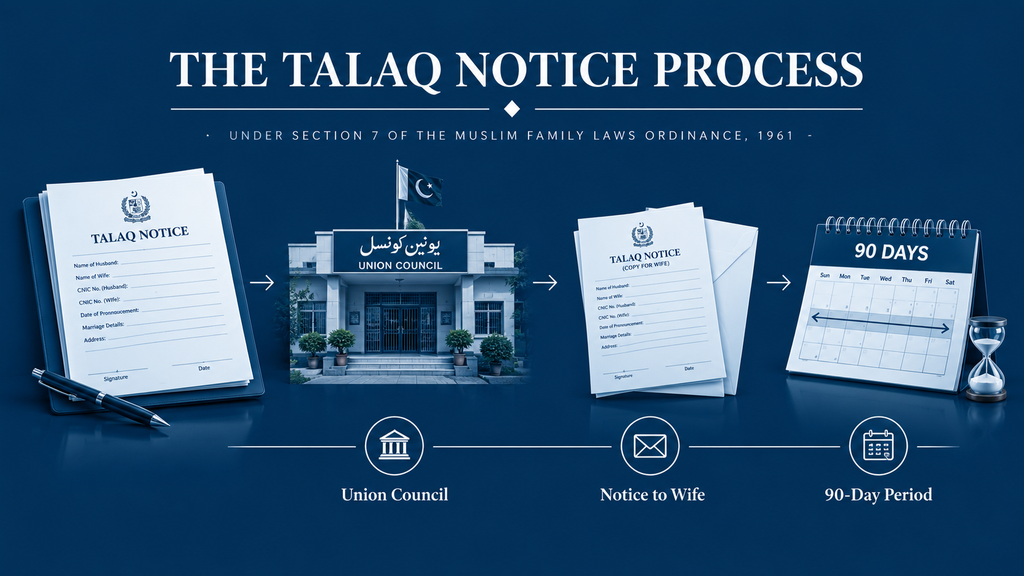
Under Section 7 of the Muslim Family Laws Ordinance 1961, a man who wishes to divorce his wife must, as soon as possible after pronouncing talaq in any form, give written notice to the Chairman of the Union Council and supply a copy to his wife. The talaq does not take effect until 90 days after the notice reaches the Chairman, unless it is revoked earlier.
1. The notice goes to the Union Council Chairman, not just to the wife
2. The wife must receive her own copy
3. The Chairman must form an Arbitration Council within 30 days to attempt reconciliation
4. If the wife is pregnant, the talaq takes effect after the 90 days or the end of the pregnancy, whichever is later
5.The Supreme Court has repeated that the 90-day rule applies to all forms of talaq, including triple talaq and divorce exercised through delegated authority
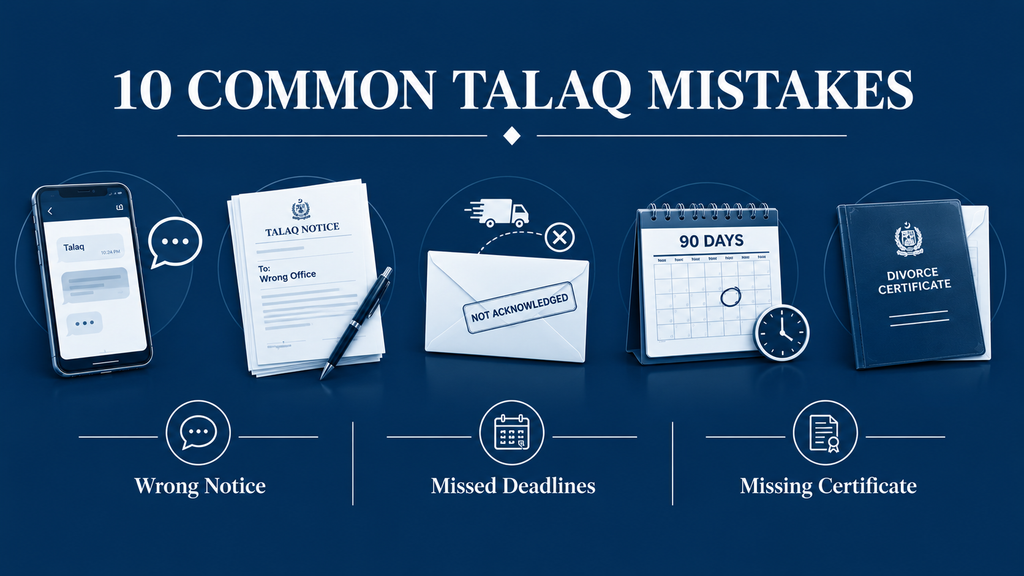
Mistake 1: Treating a Verbal or WhatsApp Talaq as Final
Many people believe that pronouncing talaq, even in front of witnesses or by message, ends the marriage on the spot. Under Pakistani law, the legal divorce does not begin until the written notice process is followed.
1. A verbal or written pronouncement alone does not complete the legal process
2. The 90-day clock starts only when notice is delivered to the Union Council
3. Acting as if you are divorced before the process ends can cause serious trouble, including with a second marriage
Mistake 2: Never Sending the Notice to the Union Council
Some husbands only hand a talaq paper to the wife or have it signed on stamp paper. A stamp paper is not a substitute for the statutory notice.
1. No notice to the Chairman means the statutory process never started
2. Failing to give the notice can be punished under the Ordinance with imprisonment of up to one year, a fine, or both
3. Years later, the lack of a certificate can block remarriage, visas, and even NADRA record updates
Mistake 3: Not Giving the Wife Her Copy
The law requires the husband to supply a copy of the notice to the wife. When she is not served, she can later say she never knew, and the husband’s position weakens.
1. Keep courier receipts, delivery proof, and a copy of what was sent
2. A wife who has not received a copy can ask the Union Council whether notice was ever received
Mistake 4: Sending It to the Wrong Union Council
The notice is generally directed to the Union Council of the area where the wife was residing when the talaq was pronounced, not simply the husband’s area or the place of the Nikah.
1. Check the wife’s address at the time of pronouncement before filing
2. A notice sent to the wrong office can create delay and disputes about whether the process ever began
Mistake 5: Counting the 90 Days From the Wrong Date
The clock runs from the day the notice is delivered to the Chairman, not from the day the words were spoken and not from the date written on the paper.
1. Keep the receiving stamp or acknowledgment from the Union Council
2. Do not assume the marriage has ended on day 91 without confirming the dates
Mistake 6: Ignoring the Arbitration Council
Once the Chairman forms an Arbitration Council, both parties are called to attempt reconciliation. Skipping these proceedings can complicate the certificate and weaken either side’s position later.
1. Attend the hearings or send a properly authorized representative
2. Raise financial issues such as dower and maintenance early, not after the certificate is issued
Mistake 7: Overlooking the Pregnancy Rule
If the wife is pregnant when the talaq is pronounced, the usual 90-day period is not the end date. The talaq takes effect only after the later of the 90 days or the end of the pregnancy.
1. Remarrying or acting as divorced before this date can lead to legal and religious complications
2. Document the wife’s condition if it is relevant to timing
Mistake 8: Revoking Informally, or Not at All
Talaq can be revoked within the 90 days, and the Supreme Court has recently upheld a revocation made within that window. But revocation can be express or implied, which means loose conduct can create confusion about whether the marriage was revived.
1. If you reconcile, put the revocation in writing and inform the Union Council
2. Do not resume the relationship without a record if you want clarity later
Mistake 9: Remarrying Before the Certificate Is Issued
Marrying again before the first talaq is effective, or without the proper permission where the first marriage still subsists, invites a complaint from the first wife and trouble with registration.
1. Wait for the 90 days to pass and obtain the Union Council certificate
2. Ask for the certificate in writing, and update your NADRA record where required
Mistake 10: Thinking Talaq Ends Financial Obligations
The talaq notice ends the marriage, not the money. Dower (mehr), maintenance during the waiting period, child maintenance, and return of agreed items can still be claimed.
1. Unpaid dower and maintenance can be pursued through the family court, and in some cases through recovery suits
2. Custody and guardianship issues are decided separately by the court
What a Correct Process Looks Like
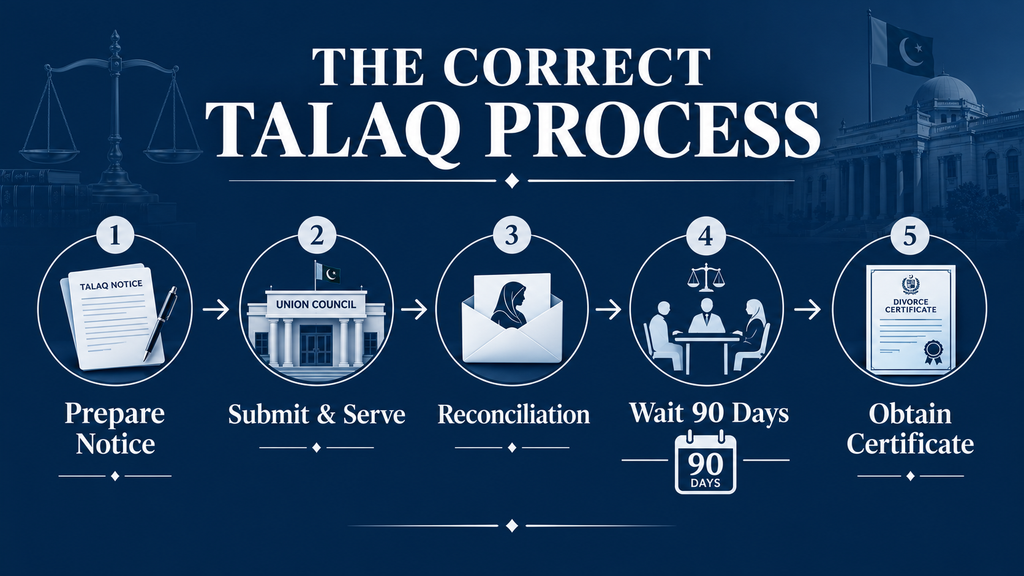
1. Prepare a written notice with both spouses’ full names, CNIC numbers, the date of pronouncement, and the marriage details
2. Submit it to the Chairman of the correct Union Council and keep the receiving copy
3. Send the wife her copy by a trackable method and keep proof
4. Attend the Arbitration Council proceedings
5. If reconciliation fails, wait for the 90 days to pass, then collect the Union Council’s certificate
6. Update NADRA and other records, and settle dower and maintenance in writing
If You Are the Wife and You Receive a Notice
1. Check with the Union Council that the notice was actually filed and note the date
2. Attend the Arbitration Council and put your financial and custody claims on record
3. Keep every document, and do not sign anything you do not understand
4. Speak to a family lawyer early, since several remedies are time-sensitive
Overseas Pakistanis and Talaq
Distance makes mistakes more likely. Notices sent from abroad must still reach the correct Union Council in Pakistan, and proof of service to the wife becomes harder. If either spouse is abroad, a lawyer acting under a proper Power of Attorney can manage filing and follow-up. See our overseas legal services for how this works in practice.
Final Thoughts
Most talaq problems are not about whether a couple wants to separate. They are about missing paper, wrong dates, and unclear records. Getting the notice right the first time protects both spouses and any children involved. Our family law team handles talaq notices, Union Council proceedings, and related financial and custody matters, and if you want to check your situation before you act, contact us and we will walk you through the correct steps.