
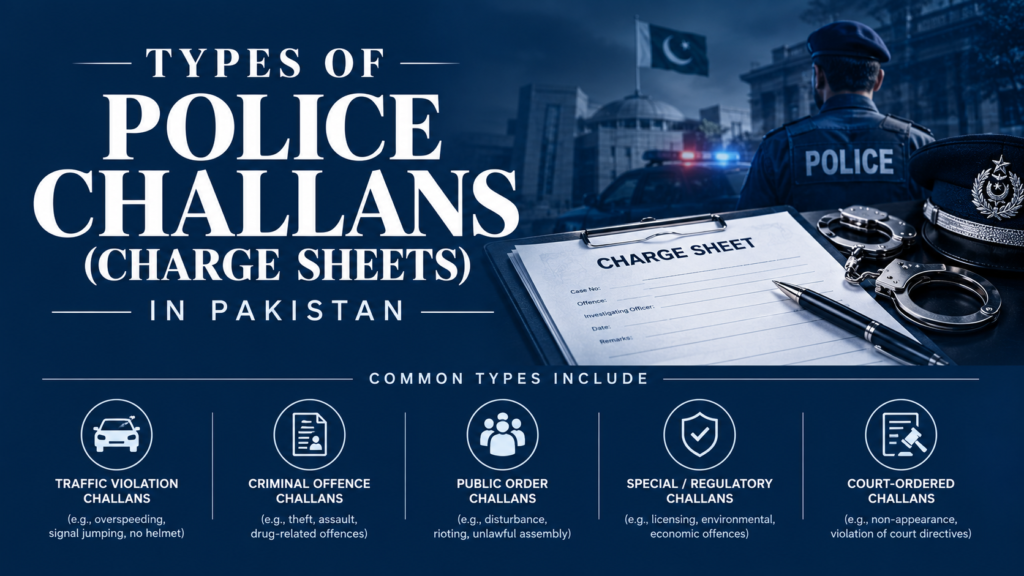
A client once called our office in a panic because her brother’s FIR had been sitting with the police for months, and every time she asked for an update, she got a different answer. One officer said the challan was “incomplete.” Another said it was still “under process.” Nobody actually explained what those words meant, or whether her brother’s case was moving forward at all. By the time she reached us, she had spent weeks assuming the worst simply because nobody had explained the system to her in plain language.
That confusion is more common than it should be, so here’s what a challan actually is, and why there isn’t just one kind of it.
What Is a Police Challan, Exactly?
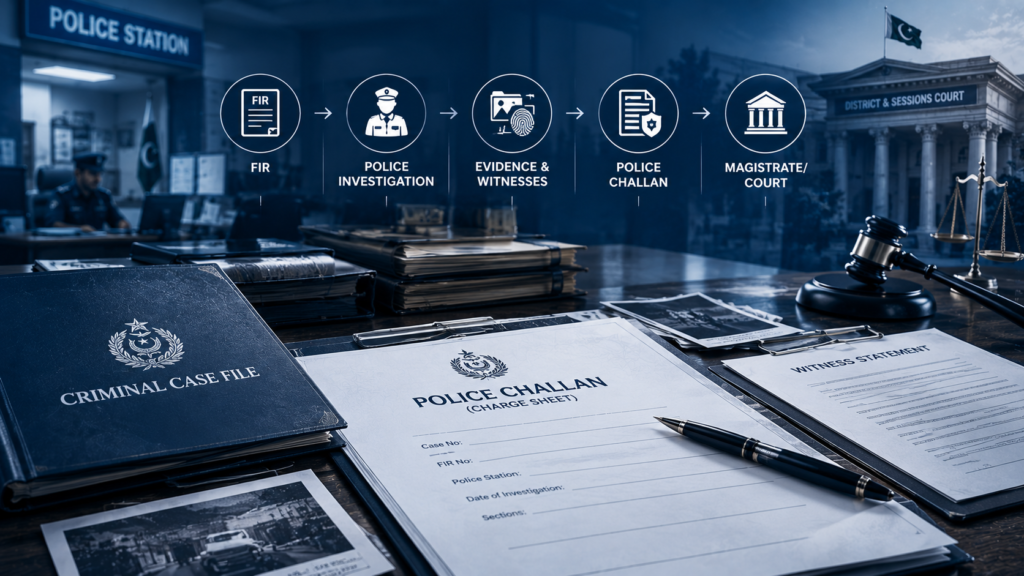
A challan, also called a police report or charge sheet, is the document a police officer submits to a Magistrate under Section 173 of the Code of Criminal Procedure (CrPC) once an investigation into an FIR has concluded, or reached a stage where a report is required. It’s the formal bridge between a police investigation and a criminal trial.
1. It’s submitted by the officer in charge of the police station or the assigned investigating officer
2. It lists the accused, the evidence gathered, the witnesses, and the specific offences alleged
3. It’s what actually determines whether a case moves to trial, gets sent back for more investigation, or gets closed
4. There is no single fixed timeline in law for completing an investigation, though delay without justification is not supposed to happen
The Five Types of Challan You’ll Actually Encounter
Not every case ends the same way, and the type of challan filed tells you exactly where a case stands.
1. Complete Challan (Final Report) This is filed once the investigating officer has gathered full evidence, finalized the list of witnesses, and formed a clear opinion on the offences committed. It’s the version that sends a case to trial with everything the prosecution needs already in place.
2. Incomplete Challan (Interim Report) Courts have repeatedly recognized this as a valid interim report under Section 173. Where certain witnesses are still missing or some legal formality hasn’t been completed, the police can submit this partial report while investigation continues, and supplement it later.
3. Supplementary or Additional Challan Under Section 173(8), investigation doesn’t legally end just because a report was already submitted. If new evidence surfaces afterward, whether oral or documentary, the police are required to forward a further report covering it.
4. Cancellation Report Sometimes called a “Class B” report in everyday police language, this is filed when the investigating officer concludes the case is false, fabricated, or otherwise not fit for prosecution. Importantly, a Magistrate can still direct the police to reinvestigate even after a cancellation report is filed.
5. Untraced Report Often called a “Class C” report, this is submitted when the accused cannot be identified or located despite a genuine investigation effort. It doesn’t permanently close the door on the case if new leads surface later.
From FIR to Challan: The Actual Timeline
If you’ve filed an FIR and are wondering how long this should take, here’s what the law actually says.
1. There’s no fixed legal deadline for a complete investigation, but it must proceed “without unnecessary delay”
2. If investigation isn’t finished within 14 days of the FIR being lodged, the officer in charge is required to forward an interim (incomplete) report to the Magistrate
3. That interim report must be submitted within 3 days of the 14-day period expiring
4. The case doesn’t stop there. Investigation continues, and a complete or supplementary challan can follow later
What Changed Recently in How Investigations Are Handled
Punjab took a notable step in restructuring how serious cases get investigated when it created the Crime Control Department (CCD) on February 26, 2025, under the Police (Amendment) Ordinance 2025. The department now operates with a dedicated staff of around 4,250 personnel and an annual budget of roughly Rs. 5.56 billion, functioning as Punjab’s premier investigation unit for serious crime, separate from routine police station work.
1. This reflects a broader push toward specialized investigation rather than leaving every serious case to general station staff
2. Provincial leadership has also shifted recently, with Rao Abdul Kareem taking over as Punjab’s Inspector General of Police in February 2026
3. These structural changes affect how quickly and how thoroughly a case moves from FIR to challan, particularly in cases involving organized or serious crime
Why the Type of Challan Actually Matters to You
This isn’t just bureaucratic terminology. The type of challan filed in your case has real consequences.
1. A complete challan means the case is heading to trial, and you should be preparing accordingly, whether as a complainant or an accused
2. An incomplete challan means the door is still open, and you can push for the investigation to be finished rather than left indefinitely pending
3. A cancellation report isn’t necessarily the end. A complainant can challenge it before the Magistrate and request further investigation
4. Where the case also involves a financial loss, a criminal complaint through the police doesn’t automatically get your money back. Many clients end up running a parallel civil claim through civil law proceedings to actually recover what they lost, similar to how a criminal case involving cyber crime in Pakistan often needs to be paired with separate recovery action
Final Thoughts
Understanding which type of challan has been filed in a case changes what you should actually expect next, and whether it’s time to push back through the courts or simply wait out an active investigation. If your case has been sitting without a clear explanation from the investigating officer, that’s usually the first sign it’s worth getting a lawyer to actually read the file rather than relying on a verbal update at the police station counter. For anything beyond the criminal process itself, from disputed property to unpaid dues connected to a case, our team can also help through recovery suits and related civil remedies. If you need help understanding where your case currently stands, contact us and we’ll walk you through it.