
Business law is a fundamental pillar of every successful organization. Whether a company is a startup, partnership, or multinational corporation, it must operate within a defined legal framework. Without a proper understanding of business law, companies risk lawsuits, financial penalties, regulatory violations, and reputational damage.
In today’s competitive marketplace, understanding business law is not optional—it is essential for sustainable growth and risk management.
What Do You Mean by Business Law?
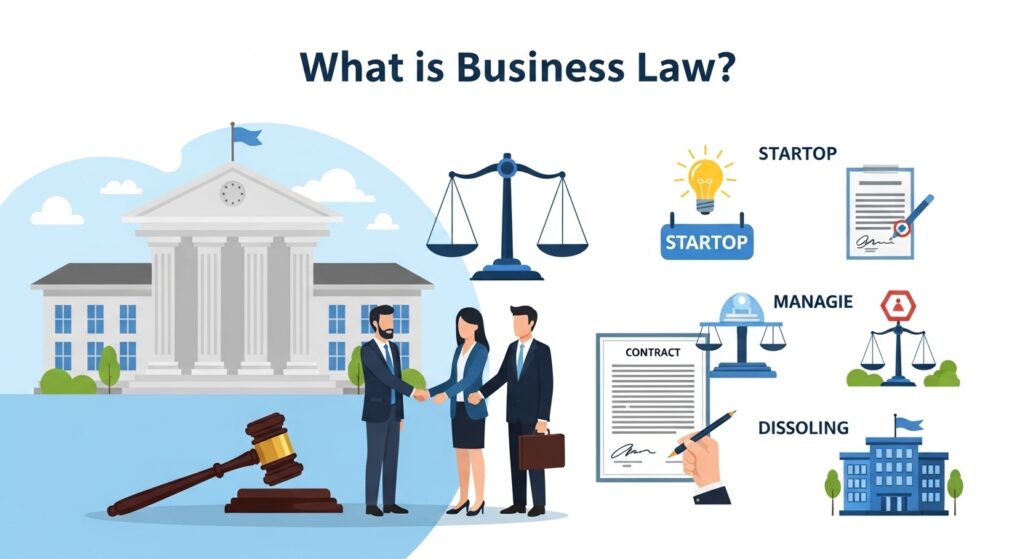
Business law refers to the body of laws and regulations that govern commercial activities and business transactions. It covers all legal aspects involved in starting, managing, and dissolving a business.
In simple terms, business law ensures that businesses operate fairly, legally, and responsibly.
It applies to:
- Sole proprietorships
- Partnerships
- Corporations
- Limited liability companies (LLCs)
- International businesses
The term definition in business law often refers to legally recognized meanings assigned to commercial terms used in contracts, policies, and regulations. Clear legal definitions reduce ambiguity and strengthen enforceability in court.
Importance of Business Law
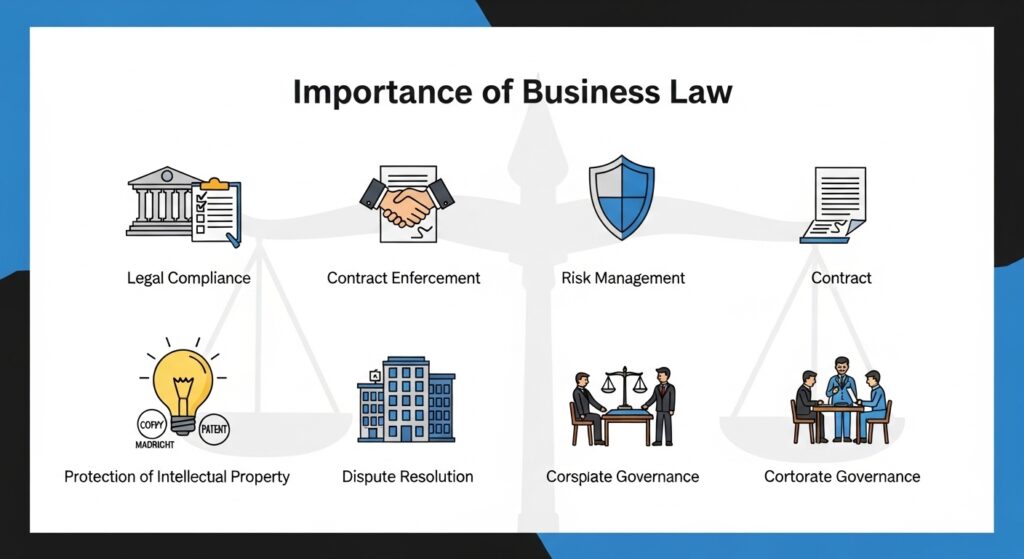
The importance of business law lies in its ability to create structure, stability, and protection within commercial operations. Below are the key reasons why business law matters:
1. Legal Compliance
Business law ensures companies comply with government regulations, tax laws, labor standards, and licensing requirements.
2. Contract Enforcement
Contracts are the foundation of business relationships. Business law makes agreements legally binding and enforceable.
3. Risk Management
A strong understanding of business law helps prevent disputes, fraud, and financial liabilities.
4. Protection of Intellectual Property
Businesses rely on trademarks, copyrights, patents, and trade secrets. Legal protection prevents unauthorized use.
5. Dispute Resolution
Business law provides mechanisms such as mediation, arbitration, and litigation to resolve conflicts professionally.
6. Corporate Governance
It defines how companies are structured, how decisions are made, and how responsibilities are distributed.
Without business law, commercial systems would lack accountability and order.
Types of Business Law
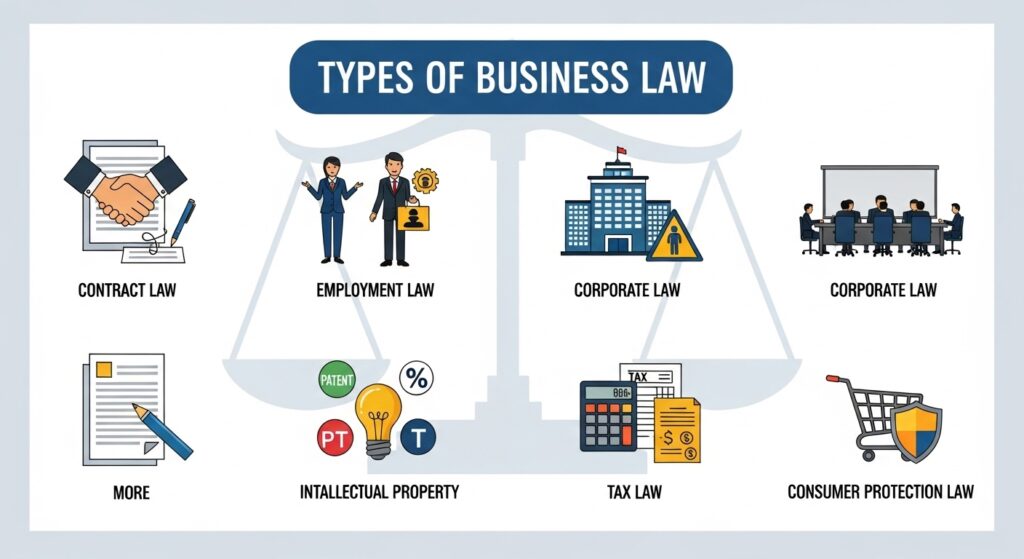
Several types of business law regulate different aspects of commercial activity. Understanding these categories helps business owners make informed decisions.
1. Contract Law
Contract law governs agreements between two or more parties. It outlines the rights and obligations of each party and provides remedies in case of breach.
2. Employment Law
Employment law regulates employer-employee relationships. It includes wage laws, workplace safety standards, discrimination policies, and termination procedures.
3. Corporate Law
Corporate law deals with company formation, shareholder rights, mergers, acquisitions, and corporate governance structures.
4. Intellectual Property Law
This area protects creative and innovative assets, including trademarks, patents, copyrights, and trade secrets.
5. Tax Law
Tax law regulates how businesses report income and pay taxes. Compliance prevents financial penalties and audits.
6. Consumer Protection Law
Ensures businesses do not engage in deceptive marketing, unfair trade practices, or fraudulent activities. Each type of business law plays a vital role in maintaining fair and lawful commercial practices.
What Are the 4 Laws of Business?
While business law is broad, four major legal pillars form its foundation:
- Contract Law – Governs agreements and obligations.
- Employment Law—Regulates workplace relationships.
- Corporate Law—Manages company structure and governance.
- Intellectual Property Law—Protects innovation and branding.
These four core areas impact nearly every business decision.
The Role of a Business Law Attorney
A business law attorney is a legal professional who advises companies on regulatory compliance, contract drafting, dispute resolution, and corporate structuring.
Their responsibilities include:
- Drafting and reviewing contracts
- Advising on mergers and acquisitions
- Protecting intellectual property
- Handling employment disputes
- Representing businesses in court
Hiring a qualified attorney minimizes legal risks and ensures business decisions align with existing laws.
Business Law Firms and Professional Legal Services
Business law firms specialize in corporate and commercial legal matters. They assist businesses of all sizes, from startups to multinational corporations.
Services typically include:
- Legal consultation
- Contract negotiation
- Compliance audits
- Litigation support
- Corporate restructuring
Partnering with an experienced law firm strengthens operational stability and long-term success.
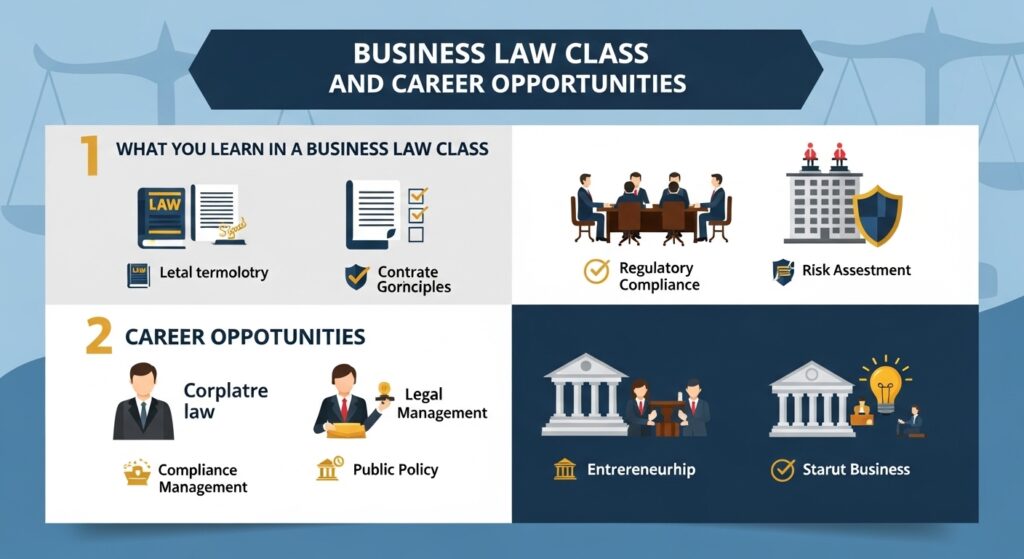
Business Law Class and Career Opportunities
A business law class is commonly offered in business administration and law degree programs. It teaches:
- Legal terminology
- Contract principles
- Corporate governance
- Regulatory compliance
- Risk assessment
Students who complete a business law class gain practical knowledge valuable for entrepreneurship, management, or legal careers.
A business law degree can open career paths in:
- Corporate law
- Compliance management
- Legal consulting
- Public policy
- Entrepreneurship
Why Every Business Owner Must Understand Business Law
Even if a company hires legal professionals, business owners should have a foundational understanding of business law.
It helps them:
- Make informed decisions
- Avoid costly mistakes
- Negotiate contracts confidently
- Protect company assets
- Maintain regulatory compliance
In today’s globalized economy, ignorance of legal requirements can lead to severe financial and reputational damage.
Conclusion
Business law is the legal framework that governs commercial activities and ensures fair business practices. From contract law and employment regulations to intellectual property and corporate governance, business law shapes every aspect of organizational operations.
Understanding the importance of business law and its various types allows companies to minimize risk, protect assets, and operate legally. Whether through formal education, a business law class, or professional legal guidance, investing in legal knowledge is essential for sustainable business growth.